


Nia Va Al Museo / Nia Goes To The Museum
Fotografías / Photographs by: Antonia Canales
Año / Year : 2023
--
Durante el primer semestre de 2017, a seis años de estar viviendo en Chile, tuve la posibilidad de regresar por una temporada a Bogotá, Colombia. Era una ciudad que yo no
conocía, y que tampoco conocía a Nia.
A propósito de la distancia con mi familia, quienes se quedaron viviendo en Santiago, me permití explorar mi alter ego travesti sin el rostro cubierto, como lo estaba haciendo desde 2015 en fiestas y galerías de la ciudad. Encontré en el maquillaje una nueva manera de presentar a Nia al mundo. Es en mi tierra natal donde surge mi investigación con las toallitas
desmaquillantes de la serie La piel. Sin la máscara, el cuento ya era distinto.
En una salida, junto a María Montoya y Mónica Mosquera, quienes se encargaron del registro audiovisual, fijamos un recorrido a pie desde mi casa temporal en Bogotá hasta el
Museo Nacional de Colombia, una de las primeras instituciones museales del continente, con el fin de presentar a Nia De Indias. Lamentablemente, al intentar ingresar, los guardias
de seguridad nos abordaron e intentaron impedir la entrada con la excusa de que la manera en que iba vestida no era la adecuada para entrar. Esta situación escaló rápidamente al
equipo del museo, que, confusamente, nos preguntaba qué íbamos a hacer dentro del edificio, a lo que nosotros respondimos que, como cualquier otro aficionado al arte, solo
íbamos a ver las obras. Esta situación me hizo caer en cuenta de que, al parecer, los museos no eran tan abiertos como quizás ingenuamente algunos pensábamos.
conocía, y que tampoco conocía a Nia.
A propósito de la distancia con mi familia, quienes se quedaron viviendo en Santiago, me permití explorar mi alter ego travesti sin el rostro cubierto, como lo estaba haciendo desde 2015 en fiestas y galerías de la ciudad. Encontré en el maquillaje una nueva manera de presentar a Nia al mundo. Es en mi tierra natal donde surge mi investigación con las toallitas
desmaquillantes de la serie La piel. Sin la máscara, el cuento ya era distinto.
En una salida, junto a María Montoya y Mónica Mosquera, quienes se encargaron del registro audiovisual, fijamos un recorrido a pie desde mi casa temporal en Bogotá hasta el
Museo Nacional de Colombia, una de las primeras instituciones museales del continente, con el fin de presentar a Nia De Indias. Lamentablemente, al intentar ingresar, los guardias
de seguridad nos abordaron e intentaron impedir la entrada con la excusa de que la manera en que iba vestida no era la adecuada para entrar. Esta situación escaló rápidamente al
equipo del museo, que, confusamente, nos preguntaba qué íbamos a hacer dentro del edificio, a lo que nosotros respondimos que, como cualquier otro aficionado al arte, solo
íbamos a ver las obras. Esta situación me hizo caer en cuenta de que, al parecer, los museos no eran tan abiertos como quizás ingenuamente algunos pensábamos.
During the first half of 2017, after living in Chile for six years, I had the chance to return to Bogotá, Colombia, for a season. It was a city I no longer knew, and one that didn't know Nia either.
Because of the distance from my family, who remained in Santiago, I allowed myself to explore my drag alter ego without covering my face—unlike what I had been doing since 2015 in the city's parties and galleries. I found in makeup a new way to present Nia to the world. It was in my homeland where my research with makeup remover wipes for the series La Piel (The Skin) first emerged. Without the mask, the story was already different.
On one outing, together with María Montoya and Mónica Mosquera—who were in charge of the audiovisual recording—we set out on foot from my temporary home in Bogotá to the National Museum of Colombia, one of the oldest museums on the continent, with the goal of introducing Nia De Indias. Unfortunately, as we tried to enter, security guards approached us and attempted to block our entry, using the excuse that the way I was dressed was inappropriate. The situation quickly escalated to the museum staff, who confusedly asked what we intended to do inside the building. We replied that, like any other art enthusiast, we were simply there to see the works. This situation made me realize that, apparently, museums were not as open as some of us had perhaps naively thought.
Because of the distance from my family, who remained in Santiago, I allowed myself to explore my drag alter ego without covering my face—unlike what I had been doing since 2015 in the city's parties and galleries. I found in makeup a new way to present Nia to the world. It was in my homeland where my research with makeup remover wipes for the series La Piel (The Skin) first emerged. Without the mask, the story was already different.
On one outing, together with María Montoya and Mónica Mosquera—who were in charge of the audiovisual recording—we set out on foot from my temporary home in Bogotá to the National Museum of Colombia, one of the oldest museums on the continent, with the goal of introducing Nia De Indias. Unfortunately, as we tried to enter, security guards approached us and attempted to block our entry, using the excuse that the way I was dressed was inappropriate. The situation quickly escalated to the museum staff, who confusedly asked what we intended to do inside the building. We replied that, like any other art enthusiast, we were simply there to see the works. This situation made me realize that, apparently, museums were not as open as some of us had perhaps naively thought.
Pasaron cinco años antes de retomar esta acción nuevamente. Recibí una invitación por primera vez para exponer una de mis obras en Londres, y no dudé en llevar a Nia conmigo
en la maleta. Esta vez, junto a la fotógrafa Antonia Canales, quien me recibió en su casa, nos dirigimos hacia la icónica National Gallery en Trafalgar Square. Era la primera vez que
Londres me recibía, y quería enfrentarme nuevamente al mismo escenario.
Para nuestra sorpresa, y en medio de las últimas polémicas en que activistas climáticos han vandalizad obras de arte en museos europeos, fuimos bienvenidas sin ningún problema. El registro obtenido ese día da cuenta de la facilidad con que nos permitieron movernos por el espacio. Me sentía una verdadera reina, robando la atención a cada uno de esos maestros del arte, musas y reyes que estaban inmortalizados en sus salones.
en la maleta. Esta vez, junto a la fotógrafa Antonia Canales, quien me recibió en su casa, nos dirigimos hacia la icónica National Gallery en Trafalgar Square. Era la primera vez que
Londres me recibía, y quería enfrentarme nuevamente al mismo escenario.
Para nuestra sorpresa, y en medio de las últimas polémicas en que activistas climáticos han vandalizad obras de arte en museos europeos, fuimos bienvenidas sin ningún problema. El registro obtenido ese día da cuenta de la facilidad con que nos permitieron movernos por el espacio. Me sentía una verdadera reina, robando la atención a cada uno de esos maestros del arte, musas y reyes que estaban inmortalizados en sus salones.
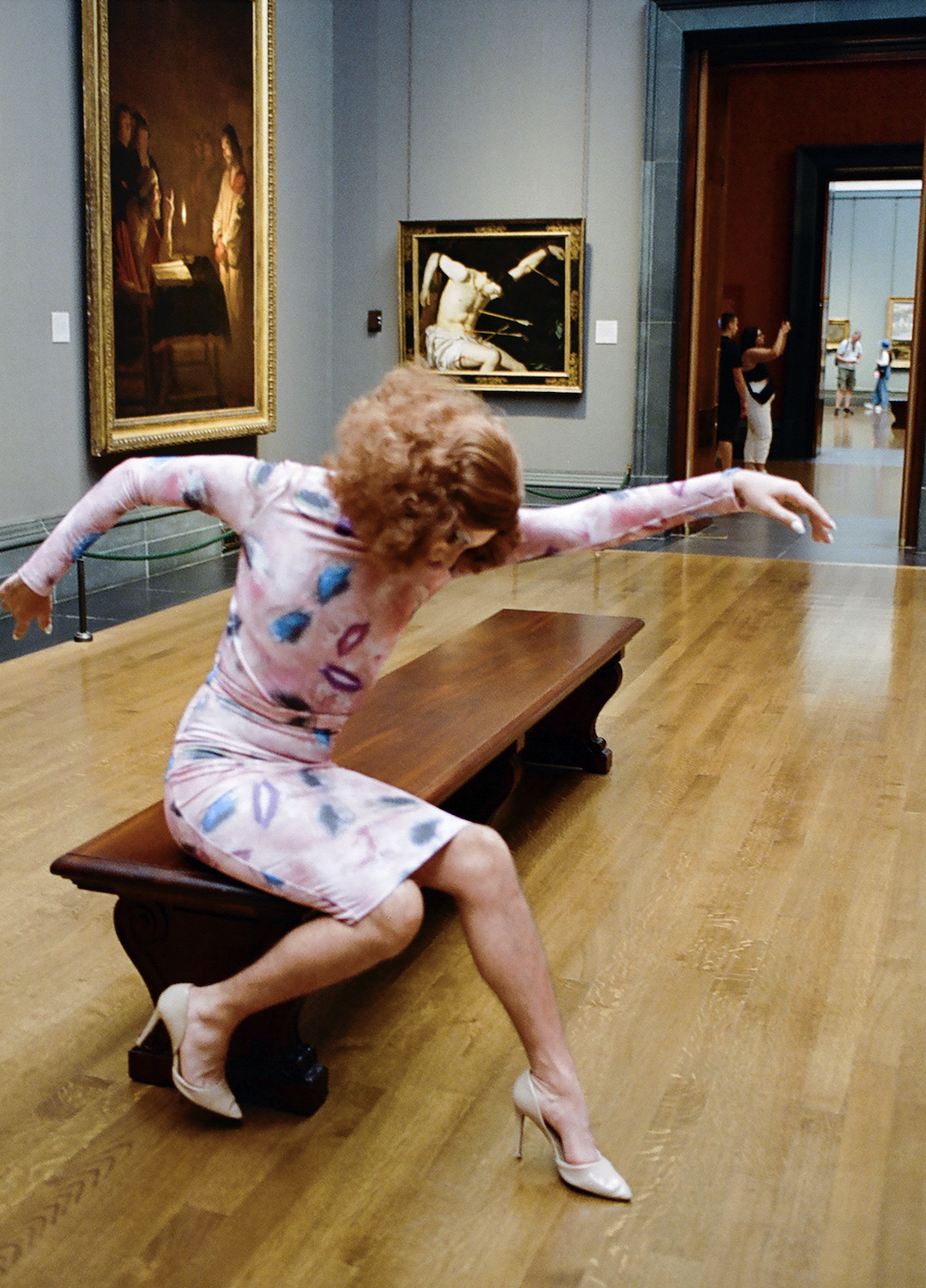
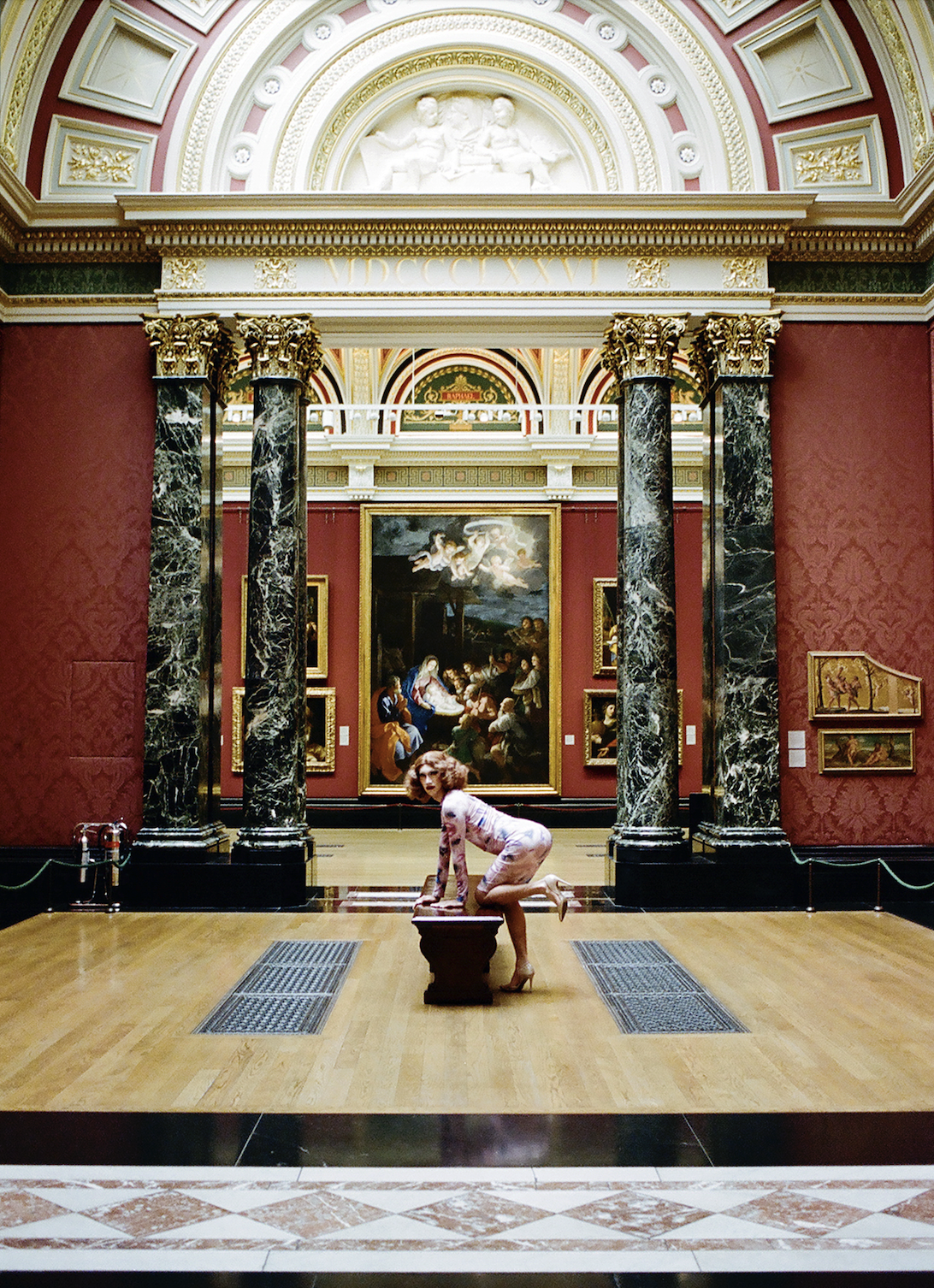
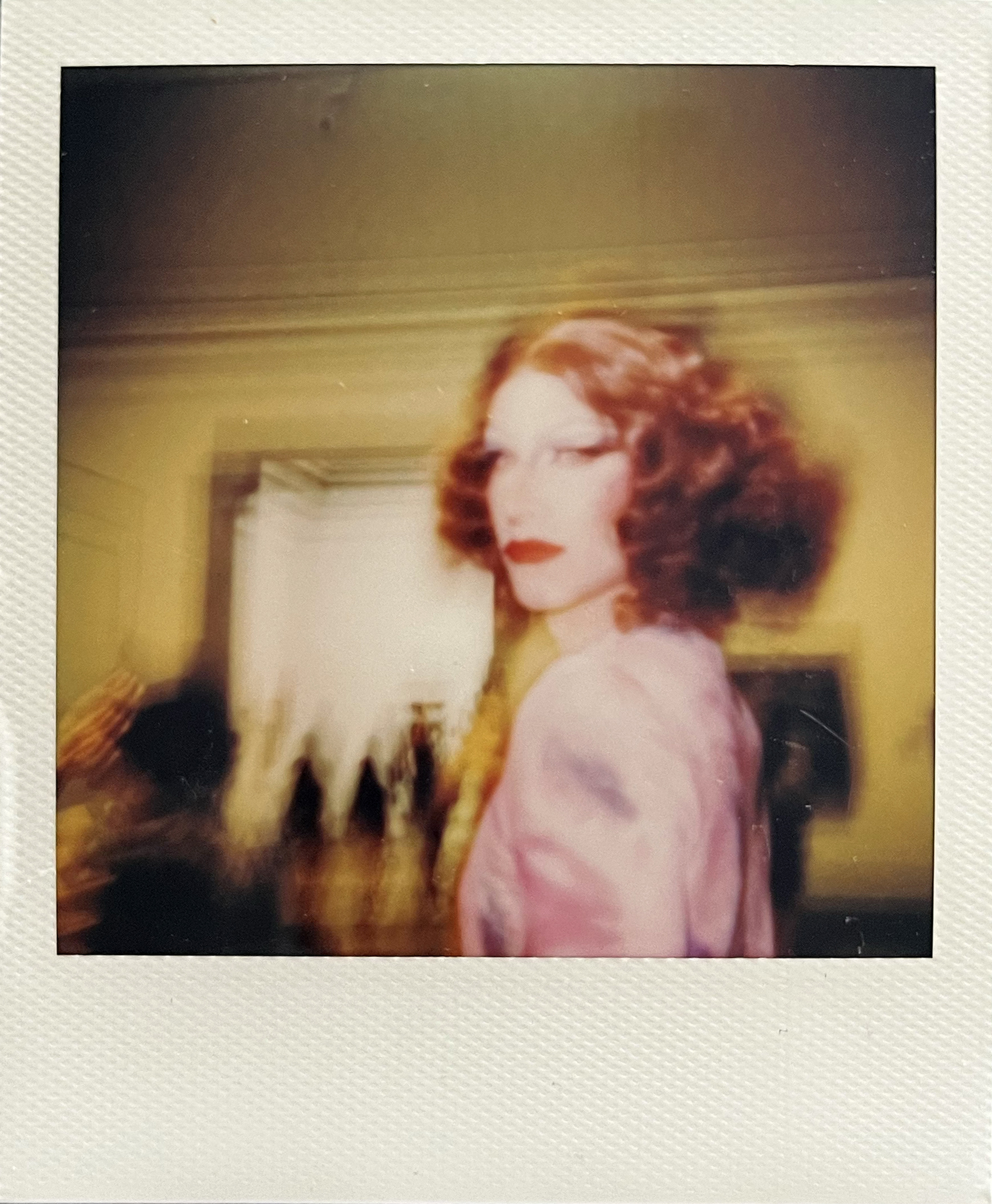
Five years passed before I took this action up again. I received my first invitation to exhibit one of my works in London, and I didn't hesitate to pack Nia in my suitcase. This time, along with photographer Antonia Canales, who hosted me at her home, we headed toward the iconic National Gallery in Trafalgar Square. It was my first time being welcomed by London, and I wanted to face that same scenario once more.
To our surprise—and in the midst of recent controversies where climate activists have vandalized artworks in European museums—we were welcomed without any issues. The documentation captured that day reflects the ease with which we were allowed to move through the space. I felt like a true queen, stealing the spotlight from every one of those art masters, muses, and kings immortalized in those halls.
To our surprise—and in the midst of recent controversies where climate activists have vandalized artworks in European museums—we were welcomed without any issues. The documentation captured that day reflects the ease with which we were allowed to move through the space. I felt like a true queen, stealing the spotlight from every one of those art masters, muses, and kings immortalized in those halls.





Tres meses después, en noviembre de 2022, realicé una residencia en São Paulo, ciudad que aún no conocía, y me di la tarea de estudiar varios museos de la ciudad. Finalmente, en el MASP, ubicado sobre la Avenida Paulista, encontré el espacio perfecto para contar alg que me venía dando vueltas en la cabeza hace un tiempo: la diferencia que percibo en las personas de la calle, en sus miradas y su trato, dependiendo de si estoy vestido como Andrés o como Nia.
Esto derivó en una acción doble en días distintos, posando en la instalaciones del montaje de la colección permanente del museo, propuesta por Lina Bo Bardi. Por el frente (Nia) y en el reverso (Andrés), una dualidad que siempre ha estado presente en mi vida diaria: Artista y Obra. Esta acción fue acompañada y registrada por mis compañeras de residencia, Tatiana Zambrano, Ely DD y Adriana Tomatis.
Esto derivó en una acción doble en días distintos, posando en la instalaciones del montaje de la colección permanente del museo, propuesta por Lina Bo Bardi. Por el frente (Nia) y en el reverso (Andrés), una dualidad que siempre ha estado presente en mi vida diaria: Artista y Obra. Esta acción fue acompañada y registrada por mis compañeras de residencia, Tatiana Zambrano, Ely DD y Adriana Tomatis.
Three months later, in November 2022, I completed a residency in São Paulo—a city I hadn't visited before—and I took on the task of studying several of the city's museums. Finally, at the MASP, located on Avenida Paulista, I found the perfect space to explore something that had been on my mind for a while: the difference I perceive in people on the street, in their gazes and how they treat me, depending on whether I am dressed as Andrés or as Nia.
This resulted in a double action on different days, posing within the permanent collection display designed by Lina Bo Bardi. On the front (Nia) and on the back (Andrés), a duality that has always been present in my daily life: Artist and Work. This action was accompanied and recorded by my fellow residents, Tatiana Zambrano, Ely DD, and Adriana Tomatis.
This resulted in a double action on different days, posing within the permanent collection display designed by Lina Bo Bardi. On the front (Nia) and on the back (Andrés), a duality that has always been present in my daily life: Artist and Work. This action was accompanied and recorded by my fellow residents, Tatiana Zambrano, Ely DD, and Adriana Tomatis.
Finalmente, el año pasado concluí esta acción, ya no como turista, sino como “guía” en mi propia ciudad, Santiago. En compañía nuevamente de Antonia, recorrimos el Museo de Bellas Artes, el MAC en ambas de sus sedes, el MAVI, el Museo de la Memoria, el Museo de la Solidaridad y el Museo Precolombino, llevando un banderín de guía con el título de la exposición “Nia va al museo”. Recorriendo los pasillos y las obras de esas instituciones, buscábamos referentes maricas en sus colecciones.
Sorpresivamente, y a seis años de la primera acción en Bogotá, el malestar de algunos guardias de seguridad era evidente. Tanto fue así, que en el Museo de la Memoria fuimos amablemente expulsadas, y en la sede de Quinta Normal del MAC nos pidieron que no lleváramos la bandera adentro. Esto me hace pensar: ¿Cómo vamos a entrar al museo y de qué manera podemos cambiar ese rechazo que la travesti genera en la institución? Ya lo dijo Pancho Casas en una de sus publicaciones en Instagram el 30 de noviembre del año pasado: “Ya se viene una gra retrospectiva 2024 de las no domadas Yeguas del Apocalipsis en el Palacio Nacional de Bellas Artes de Chile, desde donde nos botaron tantas veces prohibiéndonos la entrada.”
Sorpresivamente, y a seis años de la primera acción en Bogotá, el malestar de algunos guardias de seguridad era evidente. Tanto fue así, que en el Museo de la Memoria fuimos amablemente expulsadas, y en la sede de Quinta Normal del MAC nos pidieron que no lleváramos la bandera adentro. Esto me hace pensar: ¿Cómo vamos a entrar al museo y de qué manera podemos cambiar ese rechazo que la travesti genera en la institución? Ya lo dijo Pancho Casas en una de sus publicaciones en Instagram el 30 de noviembre del año pasado: “Ya se viene una gra retrospectiva 2024 de las no domadas Yeguas del Apocalipsis en el Palacio Nacional de Bellas Artes de Chile, desde donde nos botaron tantas veces prohibiéndonos la entrada.”
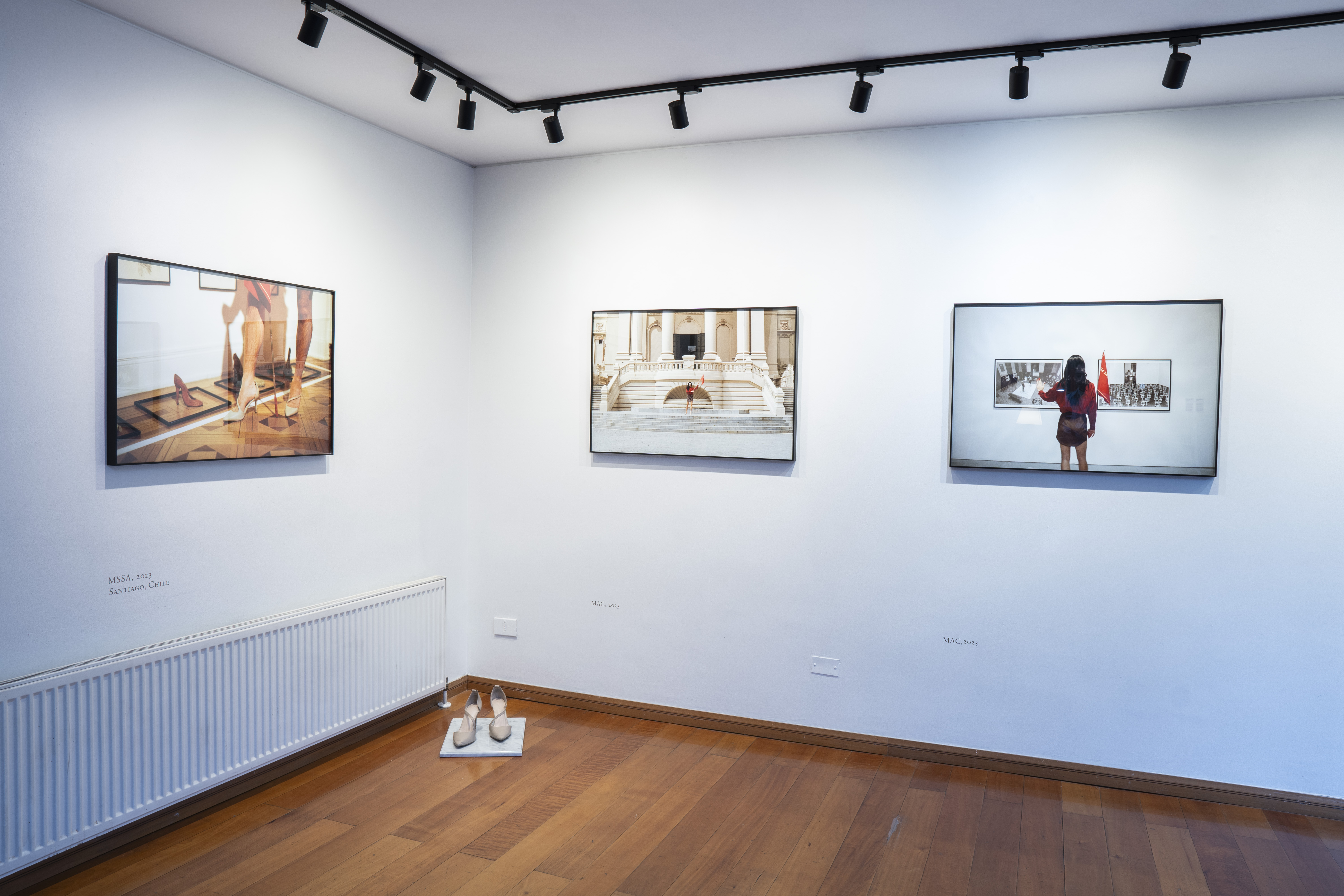
Finally, last year I concluded this performance—no longer as a tourist, but as a "guide" in my own city, Santiago. Accompanied once again by Antonia, we visited the Museo de Bellas Artes, both branches of the MAC, the MAVI, the Museum of Memory, the Museum of Solidarity, and the Pre-Columbian Museum, carrying a guide’s pennant titled with the exhibition’s name: “Nia goes to the museum.” As we moved through the halls and the works of these institutions, we searched for queer (maricas) references within their collections.
Surprisingly, six years after that first action in Bogotá, the discomfort of some security guards was still evident. It was so palpable that we were "politely" expelled from the Museum of Memory, and at the Quinta Normal branch of the MAC, we were asked not to carry the flag inside. This makes me wonder: How are we going to enter the museum, and in what way can we change the rejection that the travesti body triggers within the institution? As Pancho Casas said in one of his Instagram posts on November 30th of last year: “A major 2024 retrospective of the untamed Yeguas del Apocalipsis is coming to Chile’s National Palace of Fine Arts—the very place they kicked us out of so many times, forbidding our entry.”
Surprisingly, six years after that first action in Bogotá, the discomfort of some security guards was still evident. It was so palpable that we were "politely" expelled from the Museum of Memory, and at the Quinta Normal branch of the MAC, we were asked not to carry the flag inside. This makes me wonder: How are we going to enter the museum, and in what way can we change the rejection that the travesti body triggers within the institution? As Pancho Casas said in one of his Instagram posts on November 30th of last year: “A major 2024 retrospective of the untamed Yeguas del Apocalipsis is coming to Chile’s National Palace of Fine Arts—the very place they kicked us out of so many times, forbidding our entry.”
 MNBA, Perla. Fotografía / Photographs by: Antonia Canales. 2023
Bandera Rechazada. Fotografía / Photographs by: Antonia Canales. 2023

¿Qué pasa cuando los cuerpos disidentes entran al museo?
Nia de Indias nos invita a transitar por los espacios patrimoniales, mediante el cuerpo insumiso de una guía drag que emplaza la existencia de contrapúblicos como agencias sociales no-normativas. Corporalidades que introducen en la institución prácticas e identidades que representan e intercambian repertorios culturales diferenciados, dinámicos y fluidos.
Nia va al museo evidencia con este gesto que la propia noción de públicos es también una ficción. Una homologación de experiencias móviles y nómades, que tensionan el habitar del museo desde sistemas reguladores y operan como campos de acciones y núcleos de conflictividad permanentes. El museo es un espacio en disputa. Un territorio de debate. Nia lo resignifica, lo trasviste y lo subvierte. Instala el cuerpo no domesticado, el enfoque biográfico, la emocionalidad de la vida pública y la emergencia disruptiva de nuevas formas de vivir el propio cuerpo del museo.
Gloria Cortés Aliaga, 2024.
What happens when dissident bodies enter the museum?
Nia de Indias invites us to transit through heritage spaces by way of the rebellious body of a drag guide, who summons the existence of counter-publics as non-normative social agencies. These are corporealities that introduce practices and identities into the institution, representing and exchanging cultural repertoires that are differentiated, dynamic, and fluid.
With this gesture, Nia va al museo (Nia goes to the museum) makes it evident that the very notion of "the public" is also a fiction. It is a homogenization of mobile and nomadic experiences that tension the inhabiting of the museum through regulatory systems, operating as fields of action and permanent cores of conflict. The museum is a space in dispute—a territory for debate. Nia resignifies it, transvestizes it, and subverts it. She installs the untamed body, the biographical lens, the emotionality of public life, and the disruptive emergence of new ways of experiencing the museum’s own body.
— Gloria Cortés Aliaga, 2024.
Nia de Indias invites us to transit through heritage spaces by way of the rebellious body of a drag guide, who summons the existence of counter-publics as non-normative social agencies. These are corporealities that introduce practices and identities into the institution, representing and exchanging cultural repertoires that are differentiated, dynamic, and fluid.
With this gesture, Nia va al museo (Nia goes to the museum) makes it evident that the very notion of "the public" is also a fiction. It is a homogenization of mobile and nomadic experiences that tension the inhabiting of the museum through regulatory systems, operating as fields of action and permanent cores of conflict. The museum is a space in dispute—a territory for debate. Nia resignifies it, transvestizes it, and subverts it. She installs the untamed body, the biographical lens, the emotionality of public life, and the disruptive emergence of new ways of experiencing the museum’s own body.
— Gloria Cortés Aliaga, 2024.

MMDH, La Llegada. Fotografía / Photographs by: Antonia Canales. 2023


Gracias por hacer esto posible / Thank you:
- Galería Isabel Croxatto
- Antonia Canales
- Gloria Cortés
- Tatiana Zambrano
- Maria Montoya
- David Hurtado
- Sebastián Leal
Artsy: https://www.artsy.net/show/isabel-croxatto-galeria-nia-va-al-museo?sort=partner_show_position