
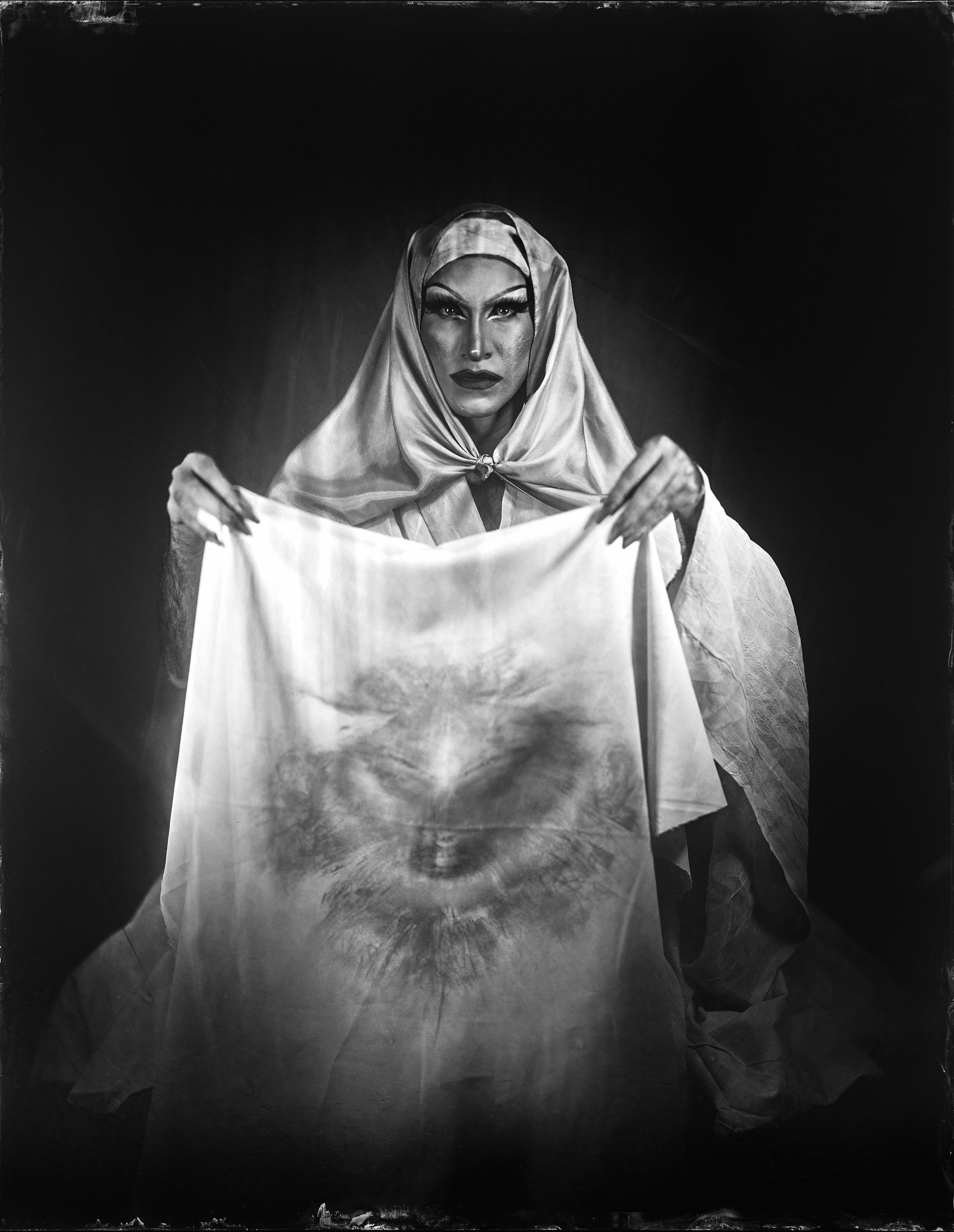
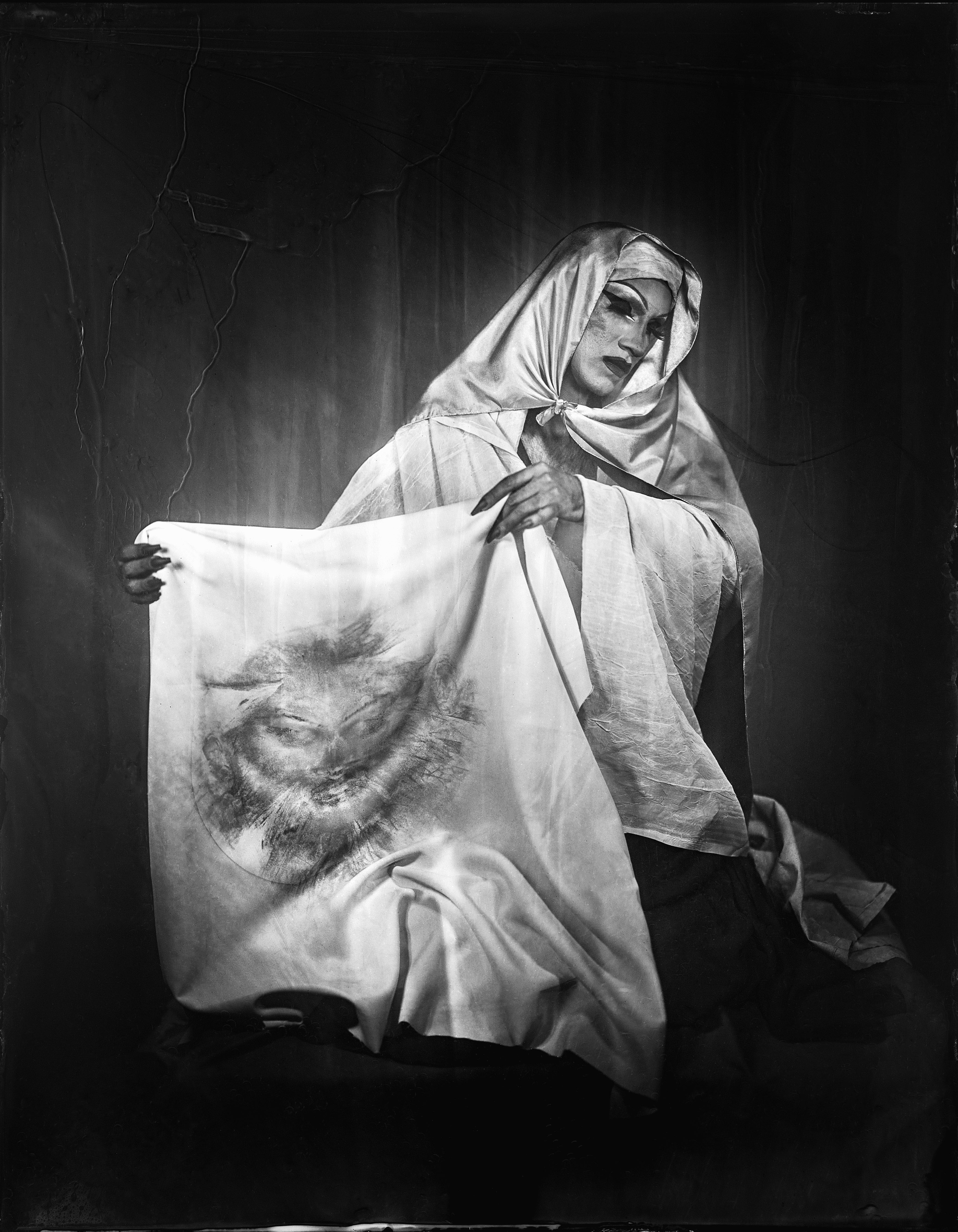
VERÓNICA.
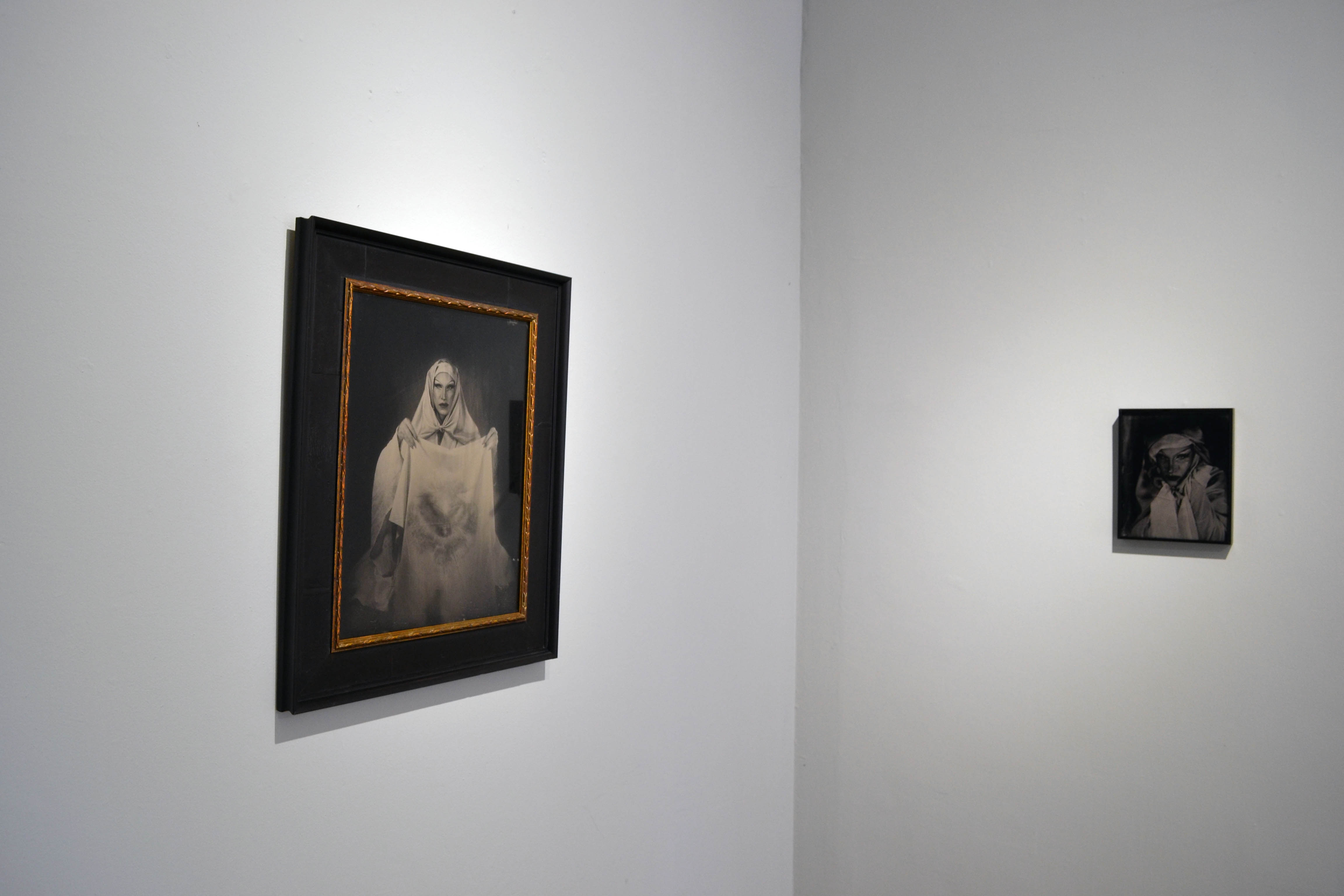
De izquierda a derecha / From left to right: Vera Icon, VI and Verónica.
Fotografías / Photographs by: Jaime Lagos
52 x 62 cm cada una / 52 x 62 cm each.
Ambrotipo sobre vidrio y marco madera / Ambrotype on glass with wooden frame.
Año 2023 / Year 2023.
Edición única / Unique edition.

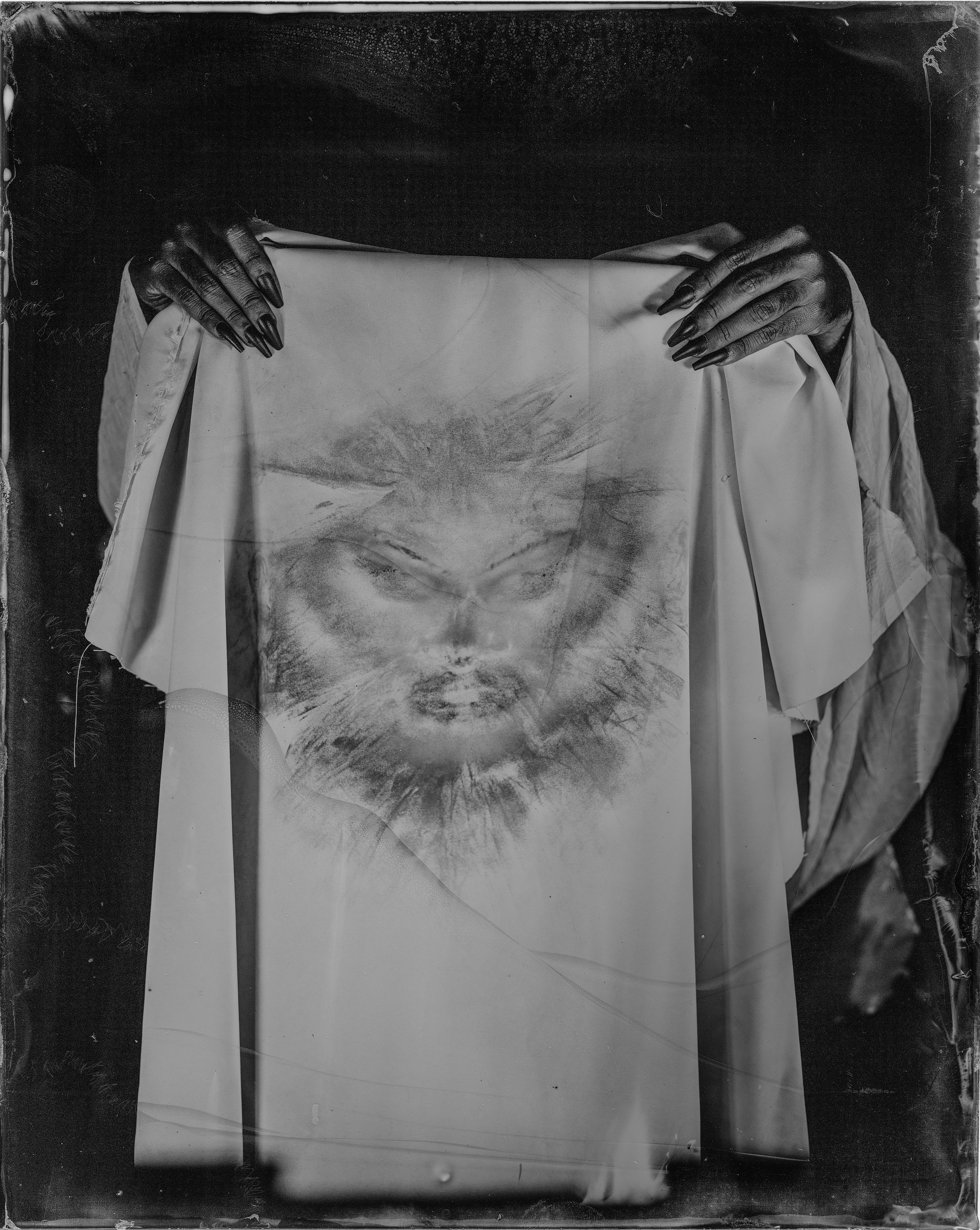
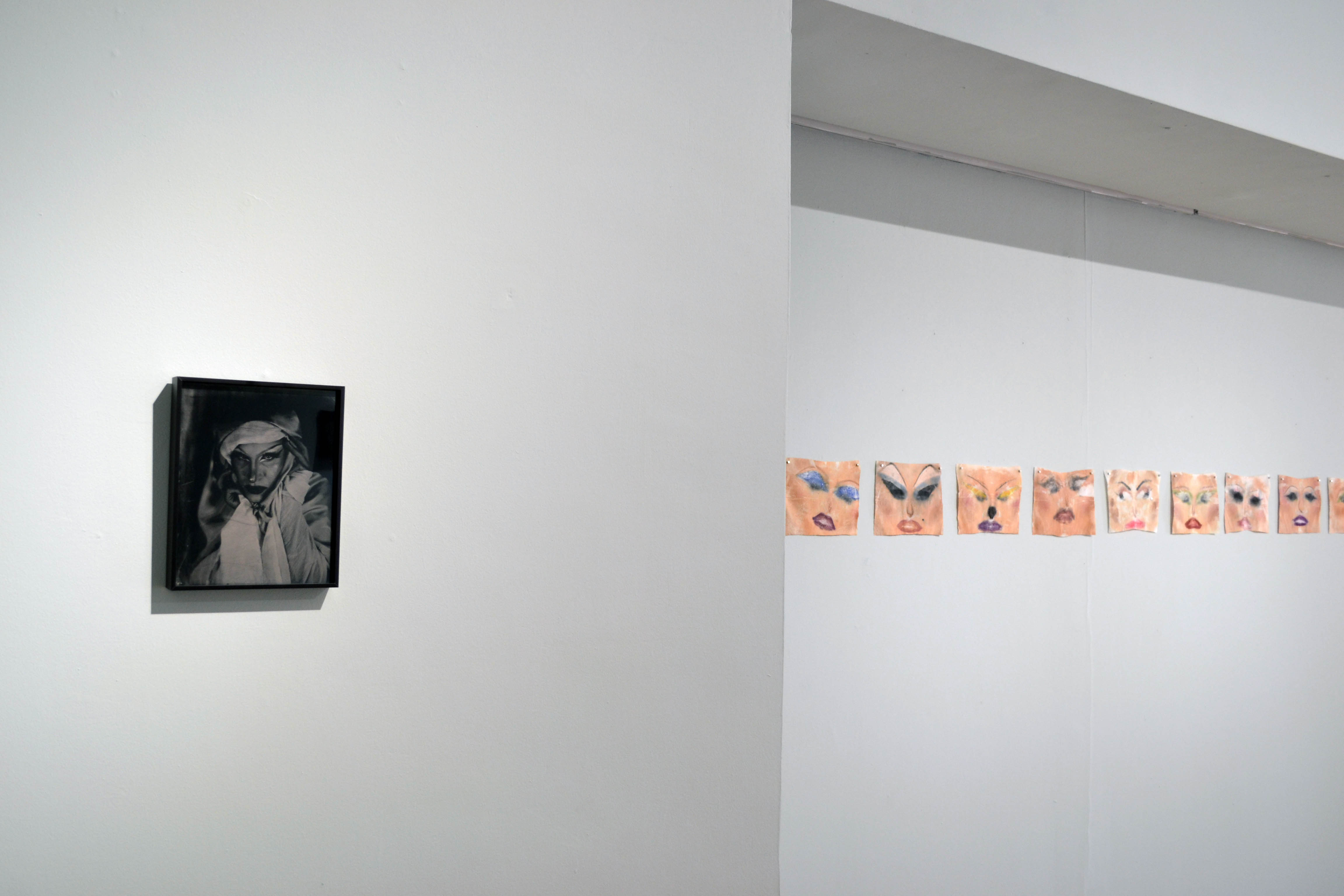
De izquierda a derecha / From left to right: Mandylion and Acheiropoietos.
Fotografías / Photographs by: Jaime Lagos.
20,5 x 25,5 cm cada una / 20,5 x 25,5 cm each.
Ferrotipo sobre aluminio con marco de aluminio. / Tintype on aluminum with aluminum frame.
Año 2023 / Year 2023
Edición única / Unique edition.
--
Plasmar, sellar y sublimar: ¿Qué superficies quedan impresas en los paños, toallas y sudarios caseros que habitan nuestros espacios más íntimos? ¿Qué nos dicen estas superficies impresas con nuestro cuerpo, y qué buscan plasmar? Pensar en la imagen de la Verónica, una de las mujeres que tendió un velo a Cristo, quedando plasmado en éste su rostro durante el vía crucis hacia su muerte, implica habitar los imaginarios sacrosantos desde la identidad Drag. Pensando en cierta idea de metamorfosis, con toques de ironía y alegoría.
Este ejercicio e investigación de casi 6 años, se torna un proceso de sublimación que Andrés Parra, y su alter ego Nia De Indias, retoma para darle una mirada autobiográfica que transita entre lo sacro y lo autobiográfico. Este juego de positivo y negativo que se traduce en fotografías, toallas desmaquillantes y un sudario de cuerpo completo, intenta re-tratar la imagen de la Verónica, buscando en ella la respuesta a esta gran pregunta sobre el VERA ICON: la imagen verdadera.
Esta búsqueda por experienciar una imagen no producida por la mano humana, dialoga con el procedimiento histórico e imaginarios de la Verónica. El sudario, las toallas desmaquillantes, que parecieran ser residuos de un montaje Drag, y el registro fotográfico de la performance que da cuenta del proceso de sublimar la imagen, conecta ambos mundos: la biografía religiosa del artista y la práctica Drag. Este vínculo que parece tan distante, encuentra un puente para dialogar (aunque sea de manera irónica y con un afán de intervención) en el procedimiento: la producción visual que construye esta muestra no está hecha en base a retoques e intervenciones, son imágenes donde no hay ficción, ni mayor “maquillaje”, como tampoco existen retoques digitales o procesuales. Nia De Indias, el alter ego Drag del artista, nace y muere en este procedimiento. Encuentra su vida en la construcción de su imagen, a la vez que cada toalla desmaquillante se plasma como una muerte fundamental.
Entonces a través del imaginario de Verónica, repensado para imprimir desde el maquillaje este vera icon, el artista nos invita a reflexionar sobre los posibles vínculos entre lo sacro y el Drag, a la vez que nos pregunta: ¿Cómo el ritual Drages también un sudario que se plasma, imprime y sublima en una superficie que sella su muerte?
Gonzalo Medina, periodista y gestor cultural.
Este ejercicio e investigación de casi 6 años, se torna un proceso de sublimación que Andrés Parra, y su alter ego Nia De Indias, retoma para darle una mirada autobiográfica que transita entre lo sacro y lo autobiográfico. Este juego de positivo y negativo que se traduce en fotografías, toallas desmaquillantes y un sudario de cuerpo completo, intenta re-tratar la imagen de la Verónica, buscando en ella la respuesta a esta gran pregunta sobre el VERA ICON: la imagen verdadera.
Esta búsqueda por experienciar una imagen no producida por la mano humana, dialoga con el procedimiento histórico e imaginarios de la Verónica. El sudario, las toallas desmaquillantes, que parecieran ser residuos de un montaje Drag, y el registro fotográfico de la performance que da cuenta del proceso de sublimar la imagen, conecta ambos mundos: la biografía religiosa del artista y la práctica Drag. Este vínculo que parece tan distante, encuentra un puente para dialogar (aunque sea de manera irónica y con un afán de intervención) en el procedimiento: la producción visual que construye esta muestra no está hecha en base a retoques e intervenciones, son imágenes donde no hay ficción, ni mayor “maquillaje”, como tampoco existen retoques digitales o procesuales. Nia De Indias, el alter ego Drag del artista, nace y muere en este procedimiento. Encuentra su vida en la construcción de su imagen, a la vez que cada toalla desmaquillante se plasma como una muerte fundamental.
Entonces a través del imaginario de Verónica, repensado para imprimir desde el maquillaje este vera icon, el artista nos invita a reflexionar sobre los posibles vínculos entre lo sacro y el Drag, a la vez que nos pregunta: ¿Cómo el ritual Drages también un sudario que se plasma, imprime y sublima en una superficie que sella su muerte?
Gonzalo Medina, periodista y gestor cultural.
To Imprint, Seal, and Sublimate: What surfaces remain imprinted on the cloths, towels, and domestic shrouds that inhabit our most intimate spaces? What do these surfaces, imprinted with our bodies, tell us, and what do they seek to capture? To consider the image of Saint Veronica—one of the women who offered a veil to Christ, capturing his face upon it during the Stations of the Cross toward his death—implies inhabiting sacrosanct imaginaries through a Drag identity. It is to think of a certain idea of metamorphosis, touched by irony and allegory.
This exercise and research, spanning nearly six years, becomes a process of sublimation that Andrés Parra and his alter ego, Nia De Indias, take up to provide an autobiographical gaze that shifts between the sacred and the personal. This interplay of positive and negative—translated into photographs, makeup remover wipes, and a full-body shroud—attempts to re-portray (re-tratar) the image of Veronica, seeking within her the answer to the great question of the VERA ICON: the true image.
This quest to experience an image "not made by human hands" dialogues with the historical procedures and imagery of Veronica. The shroud and the makeup wipes—which appear to be the residues of a Drag assembly—alongside the photographic record of the performance documenting the sublimation of the image, connect two worlds: the artist's religious biography and Drag practice. This link, which seems so distant, finds a bridge for dialogue (albeit ironically and with an interventionist urge) through the procedure itself. The visual production that builds this exhibition is not based on retouches or interventions; these are images where there is no fiction, no extra "makeup," nor digital or procedural alterations. Nia De Indias, the artist's Drag alter ego, is born and dies within this procedure. She finds life in the construction of her image, just as each makeup wipe is imprinted as a fundamental death.
Thus, through the imagery of Veronica—reimagined to print this vera icon via makeup—the artist invites us to reflect on the possible links between the sacred and Drag, while asking us: How is the Drag ritual also a shroud that is captured, printed, and sublimated onto a surface that seals its death?
— Gonzalo Medina, Journalist and Cultural Manager.
This exercise and research, spanning nearly six years, becomes a process of sublimation that Andrés Parra and his alter ego, Nia De Indias, take up to provide an autobiographical gaze that shifts between the sacred and the personal. This interplay of positive and negative—translated into photographs, makeup remover wipes, and a full-body shroud—attempts to re-portray (re-tratar) the image of Veronica, seeking within her the answer to the great question of the VERA ICON: the true image.
This quest to experience an image "not made by human hands" dialogues with the historical procedures and imagery of Veronica. The shroud and the makeup wipes—which appear to be the residues of a Drag assembly—alongside the photographic record of the performance documenting the sublimation of the image, connect two worlds: the artist's religious biography and Drag practice. This link, which seems so distant, finds a bridge for dialogue (albeit ironically and with an interventionist urge) through the procedure itself. The visual production that builds this exhibition is not based on retouches or interventions; these are images where there is no fiction, no extra "makeup," nor digital or procedural alterations. Nia De Indias, the artist's Drag alter ego, is born and dies within this procedure. She finds life in the construction of her image, just as each makeup wipe is imprinted as a fundamental death.
Thus, through the imagery of Veronica—reimagined to print this vera icon via makeup—the artist invites us to reflect on the possible links between the sacred and Drag, while asking us: How is the Drag ritual also a shroud that is captured, printed, and sublimated onto a surface that seals its death?
— Gonzalo Medina, Journalist and Cultural Manager.
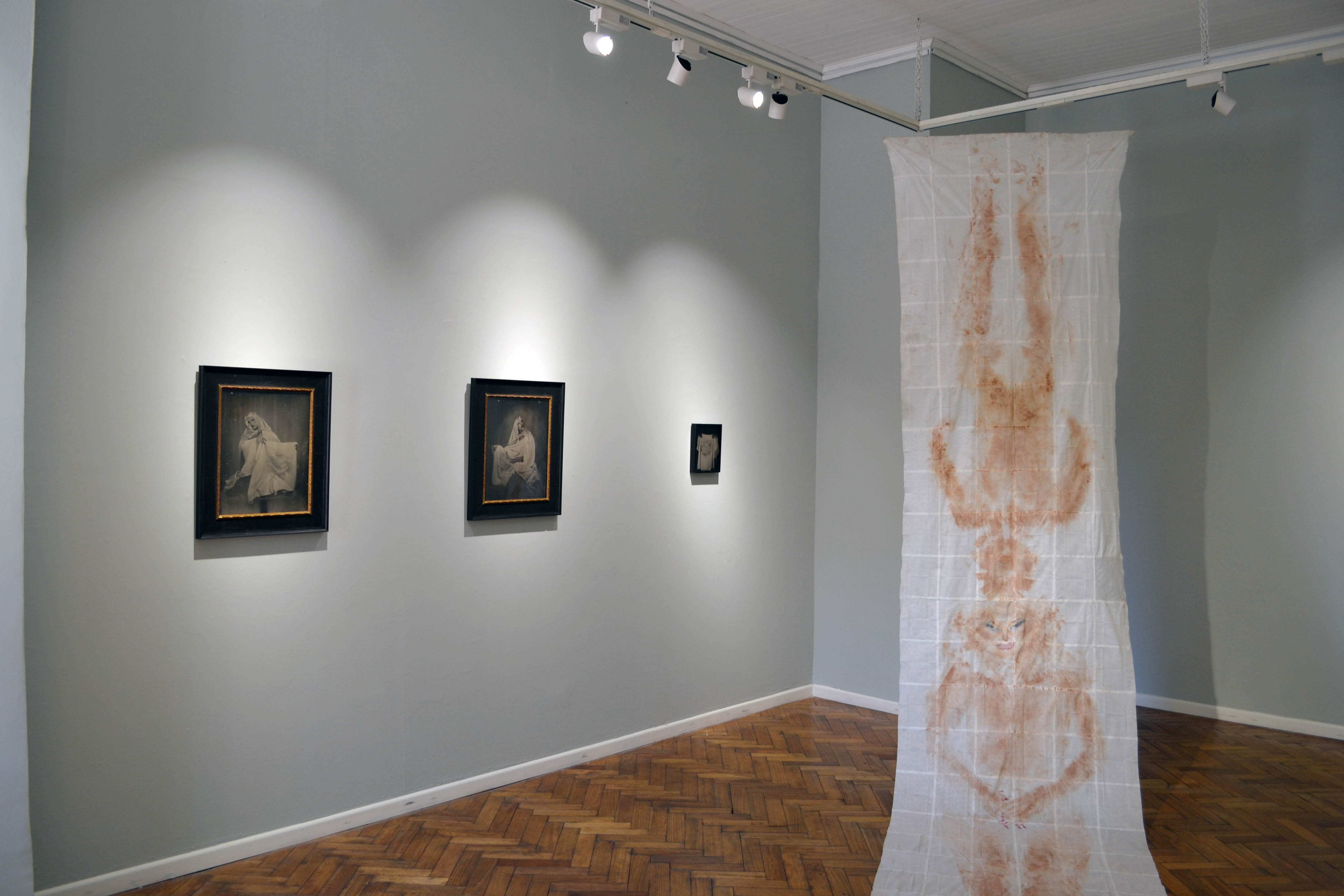

La Síndone
105 x 407 cm
Collage toallas desmaquillantes y grabado con maquillaje / Collage of makeup removal wipes and makeup engraving.
Año 2023 / Year 2023
Edición única / Unique edition.
---
Producción / Production: David Hurtado y Sebastián Leal
Gracias / Thank you: Isabel Croxatto Galería, Antonia Canales, María José Holloway, Ignacia Valdebenito, Diego Mora, Francisco Vera.
Centro Cultural Montecarmelo, Providencia.
Año 2023 / Year 2023.